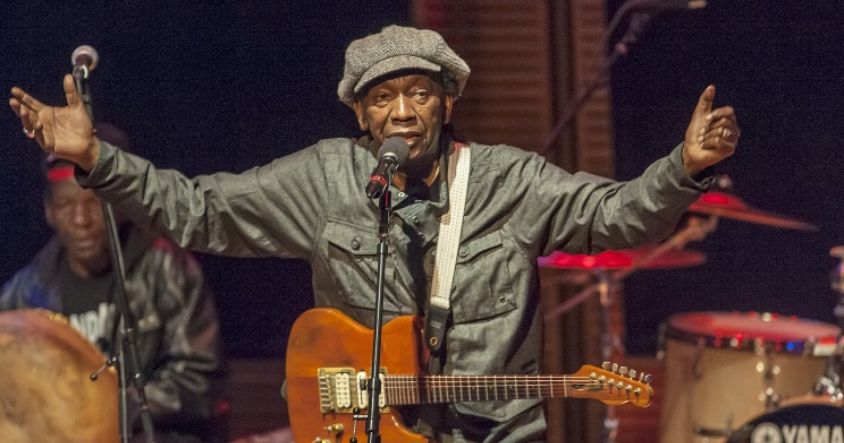
Thomas Mapfumo (born 1945) stands among the most influential musicians in Zimbabwean history, celebrated internationally as the pioneer of Chimurenga music, a genre that blends traditional Shona mbira sounds with modern instrumentation to articulate political consciousness, cultural identity and social resistance.
Often referred to as “The Lion of Zimbabwe,” Mapfumo’s music played a pivotal role during the liberation struggle and continued to shape national discourse in the decades that followed.
His work remains deeply intertwined with Zimbabwe’s cultural evolution, giving voice to the aspirations, struggles and triumphs of the people.
Early Life and Cultural Foundations
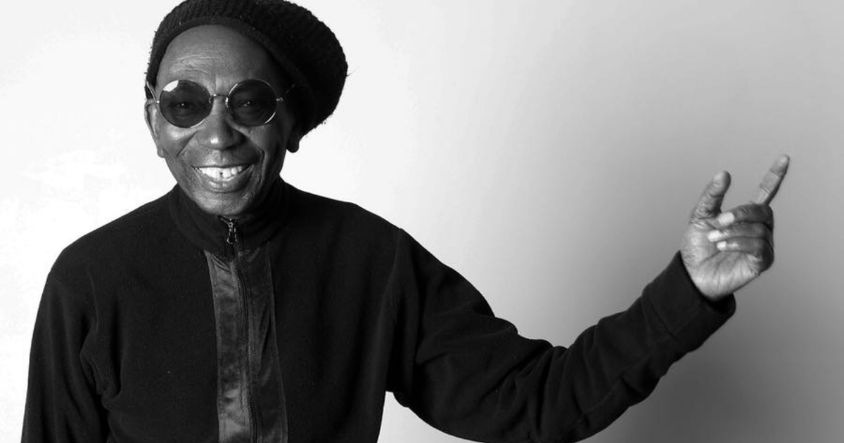
Thomas Tafirenyika Mapfumo was born in 1945 in Marondera, before spending childhood years in rural areas such as the Wutume district, where he was exposed to traditional Shona spiritual practices, ancestral ceremonies and, critically, mbira music.
These experiences would later shape the sonic identity of his career.
Growing up during colonial Rhodesia, Mapfumo witnessed social inequalities and political tensions that influenced the themes of resistance and self-determination within his music.
By the time he moved to Highfield, Harare, a vibrant township that incubated Zimbabwean creativity, Mapfumo was already developing a refined musical awareness anchored in cultural authenticity and defiance.
Early Musical Experiments and Urban Influence
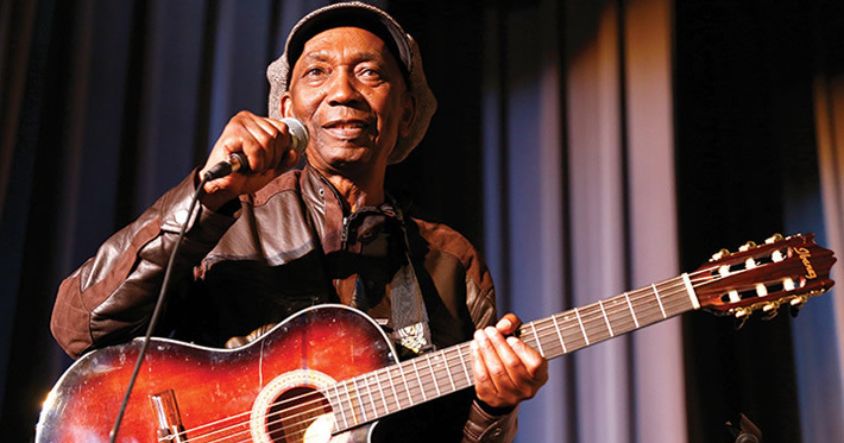
In the 1960s and early 1970s, Mapfumo joined several urban bands, immersing himself in the Afro-rock and soul-infused musical environment prevalent at the time.
He performed with groups such as The Springfields and The Acid Band, experimenting with Western genres while gradually cultivating his desire to create a wholly Zimbabwean sound.
His breakthrough came when he began adapting traditional mbira melodies for electric guitar and bass, crafting a haunting, cyclical style of music based on ancestral rhythms.
This innovation gave birth to Chimurenga music, a term derived from the Shona word for “struggle,” reflecting both cultural heritage and political resistance.
Rise of Chimurenga Music and Political Consciousness

As Chimurenga music matured, Mapfumo’s compositions became overtly political, critiquing colonial oppression through metaphorical Shona proverbs and symbolic storytelling that often evaded censorship.
Songs like “Pfumvu Paruzevha,” “Hokoyo” and “Tozvireva Kupiko” resonated deeply among black Zimbabweans, giving voice to shared frustrations.
The Rhodesian government recognised the subversive power of his art. Mapfumo was detained without trial in 1979 because of his music’s growing influence on nationalist sentiment. His imprisonment only amplified his status as a cultural revolutionary.
Formation of Blacks Unlimited
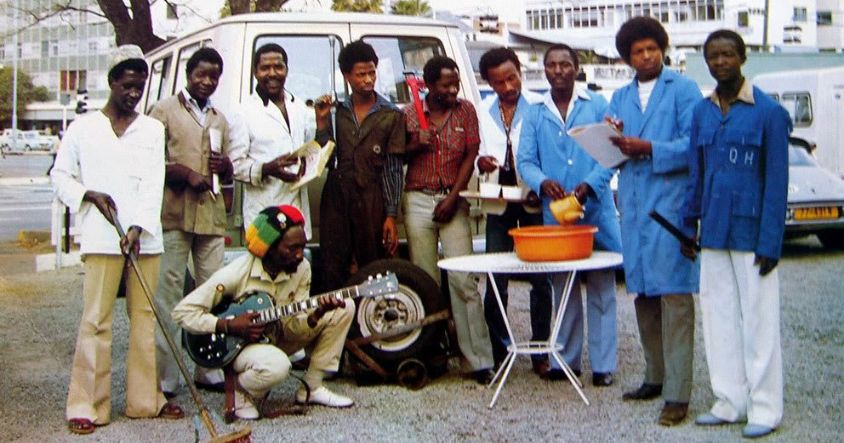
After leaving The Acid Band, Mapfumo formed The Blacks Unlimited, the ensemble that would define his sound and international reputation.
With mbira, guitars, ngoma drums, hosho and intricate vocal layering, the group delivered a modernised expression of traditional Zimbabwean spirit.
Following independence in 1980, Mapfumo’s music turned to themes of reconstruction and accountability.
Instead of celebrating unconditionally, he used his art to critique emerging corruption and complacency.
Albums like “Corruption,” “Varombo Kuvarombo” and “Chimurenga for Justice” openly challenged government failures.
Thomas Mapfumo’s International Recognition and Tour Legacy
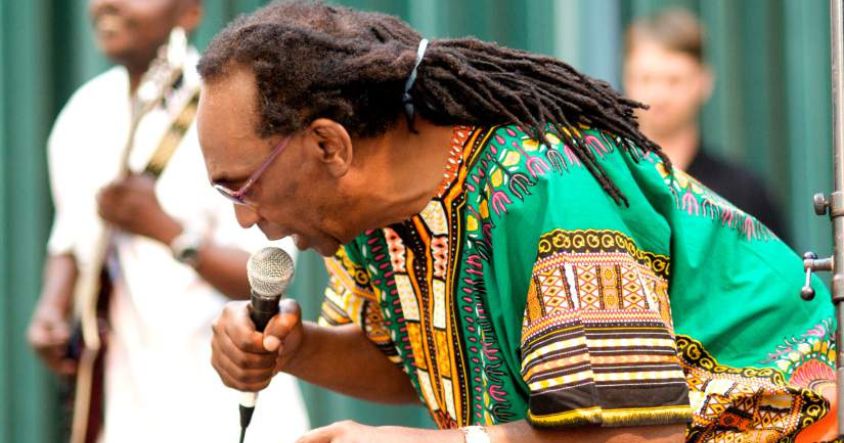
From the late 1980s onward, Mapfumo earned international acclaim, performing across Europe and North America.
World-music audiences embraced the hypnotic grooves of Chimurenga, while academic communities studied his music for its political and cultural significance.
He collaborated with global artists, appeared in documentaries and took part in festivals that celebrated African diasporic identity.
Despite his success abroad, Mapfumo remained intimately connected to Zimbabwean communities.
His concerts often blended celebration with political critique, offering platforms for reflection and cultural pride.
Self-Exile and Continued Activism
As Mapfumo’s criticism of Zimbabwe’s post-independence leadership intensified in the 1990s and 2000s, tensions grew between him and the state.
Faced with concerns over political repression and censorship, he relocated to Eugene, Oregon in the United States, entering a period of self-imposed exile.
Even abroad, his music continued to address issues affecting Zimbabwe, such as economic decline, governmental abuses and social erosion.
Though physically distant, Mapfumo remained spiritually and artistically connected to Zimbabwe.
His concerts abroad became gathering points for diaspora communities, while his recordings sustained his relevance at home.
Return to Zimbabwe and Late-Career Revival
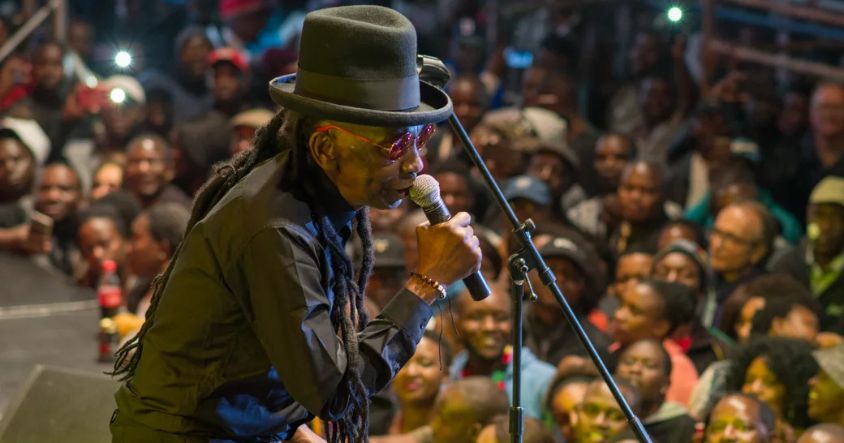
After nearly 14 years away, Mapfumo made a historic return to Zimbabwe in 2018 for a landmark concert that drew tens of thousands of fans.
The event symbolised cultural healing, generational homage and renewed engagement between the legendary musician and his homeland.
His return reinforced his status as a foundational figure whose influence extends across decades of Zimbabwean memory.
In his later career, Mapfumo continued to release new music, mentor young artists, and advocate for cultural preservation. His work remains deeply tied to issues of justice, dignity and national identity.
Musical Style and Artistic Influence
At the heart of Mapfumo’s artistry is the mbira-inspired guitar style, featuring cyclical riffs, interlocking patterns and percussive textures.
His compositions blend traditional spiritual aesthetics with electrified modernity, creating a visceral soundscape that feels simultaneously ancestral and contemporary.
Lyrically, his music explores themes of resistance, communal solidarity, spiritual resilience, cultural continuity and political accountability.
Many scholars consider Mapfumo’s discography an alternative archive of Zimbabwean history, chronicling the emotional and ideological evolution of the nation.
His influence is immense. Generations of Zimbabwean artists — from sungura musicians to Afro-fusion performers — credit Mapfumo as the architect of modern Zimbabwean musical identity.
Honours, Global Impact and Cultural Legacy
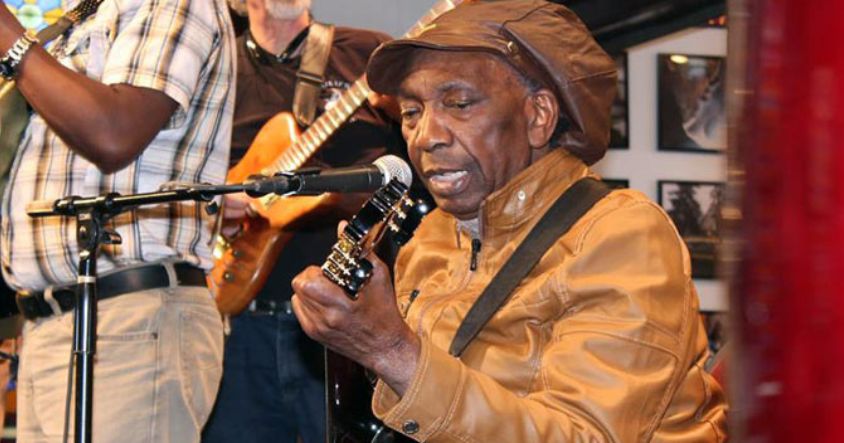
Mapfumo’s contributions have been recognised through international awards, academic studies and cultural honours. His commitment to championing Zimbabwean heritage earned him global respect, while his willingness to speak truth to power secured his legacy as not only a musician but a social commentator and public intellectual.
Around the world, he is studied in universities, featured in exhibitions, and celebrated as a figure whose work transcends entertainment to become a living narrative of freedom, struggle and identity.
Discography
Studio Albums
Hokoyo! (1978)
Gwindingwi Rine Shumba (1980)
Shumba (1982)
Chimurenga for Justice (1985)
Corruption (1989)
Chamunorwa (1990)
Varombo Kuvarombo (1991)
Hondo (1994)
Roots Chimurenga (1996)
Chimurenga ’98 (1998)
Chimurenga Explosion (2000)
Compilations & Collections
Lion Songs: Essential Tracks in the Making of Zimbabwe (2015)
Shumba: The Lion (1985 & reissues)
Notable Singles / Signature Songs
Pfumvu Paruzevha
Hokoyo
Bhutsu Mutandarika
Corruption
Shumba
Muchadura