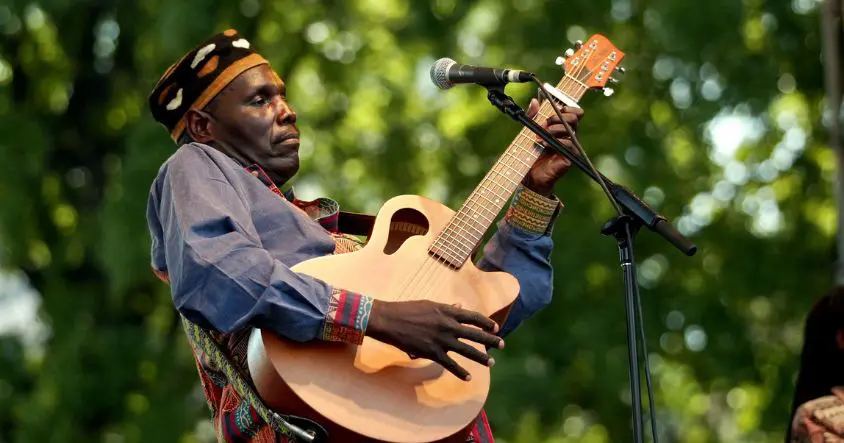
Oliver Mtukudzi (22 September 1952 – 23 January 2019), widely known by his nickname Tuku, was a Zimbabwean musician, songwriter, guitarist, actor, philanthropist and entrepreneur whose influence extended far beyond the borders of his home country.
Over a recording career spanning more than four decades, Mtukudzi released over 60 albums and developed a distinctive musical style known as Tuku Music, a fusion of traditional Shona rhythms, mbira-inspired guitar patterns, jazz inflexions, and contemporary African popular music.
He is widely regarded as one of Zimbabwe’s greatest cultural ambassadors and stands alongside artists such as Thomas Mapfumo and Alick Macheso as one of the defining figures of modern Zimbabwean music.
Early Life and Background
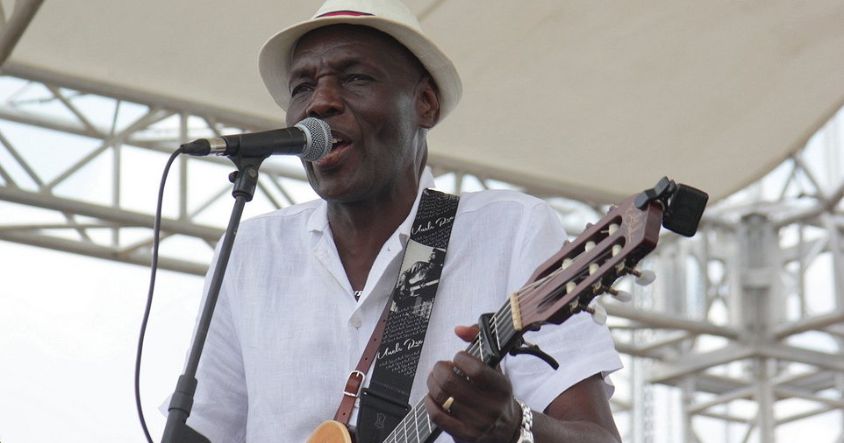
Oliver Mtukudzi was born in Highfield, a densely populated suburb of Harare, then part of Southern Rhodesia.
Highfield was historically significant as a centre of political activism and cultural development, and it produced many of Zimbabwe’s influential figures in politics, arts and sports.
Growing up in this environment exposed Mtukudzi to a vibrant blend of traditional Shona culture, Christian hymnody, and urban township music.
He was the sixth of seven children in a family that valued music and community life.
Church choirs and local gatherings played an important role in shaping his early musical sensibilities.
These early influences would later manifest in his layered vocal harmonies and rhythmic guitar arrangements.
Mtukudzi attended Churchill High School in Harare, where he continued nurturing his interest in music.
By the early 1970s, he was determined to pursue music professionally, at a time when Zimbabwean popular music was beginning to evolve in response to both traditional roots and modern influences.
Early Career and the Wagon Wheels Era
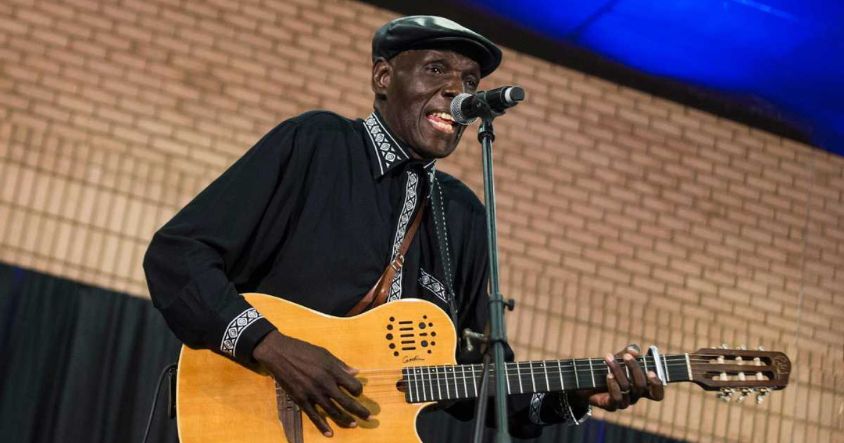
Mtukudzi’s professional career began in the early 1970s when he joined the band Wagon Wheels, which also featured the future chimurenga pioneer Thomas Mapfumo.
The group recorded the hit single “Dzandimomotera” in 1975, one of the earliest commercially successful Zimbabwean pop recordings.
The success of Wagon Wheels marked Mtukudzi’s entry into the recording industry, but he soon embarked on a solo path.
His early solo work coincided with the final years of the Rhodesian era and the period leading to Zimbabwe’s independence in 1980.
As political change transformed the country, the arts sector expanded, creating new opportunities for local musicians.
Mtukudzi’s early albums established him as a promising artist with a unique voice and an innovative guitar style.
Unlike some of his contemporaries who focused explicitly on liberation politics, Mtukudzi gravitated toward social and personal themes.
The Creation of Tuku Music
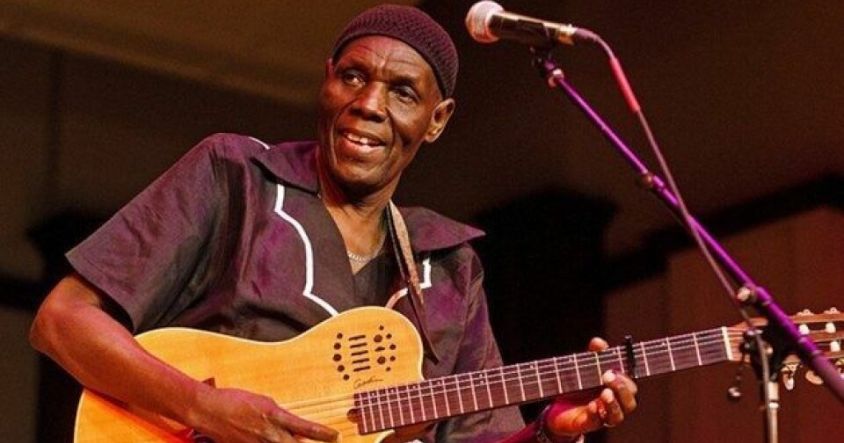
Oliver Mtukudzi’s most enduring contribution to African music was the development of Tuku Music, a genre label that emerged from his distinctive approach to composition and performance. Tuku Music was characterised by:
Interwoven guitar melodies inspired by traditional mbira patterns
Prominent basslines and rhythmic percussion
Call-and-response vocal arrangements
A deep, resonant baritone voice
A blend of traditional Shona rhythms with jazz and pan-African influences
While Zimbabwean music in the 1980s was strongly influenced by chimurenga, popularised by Thomas Mapfumo, Mtukudzi’s music was less overtly political and more focused on social commentary, morality, relationships, and spirituality.
His songs addressed themes such as respect within families, generational conflict, women’s rights, domestic violence, HIV/AIDS awareness, and personal responsibility.
This broader social focus made his music widely accessible and deeply resonant across different demographics, both within Zimbabwe and internationally.
Breakthrough Success and Major Albums
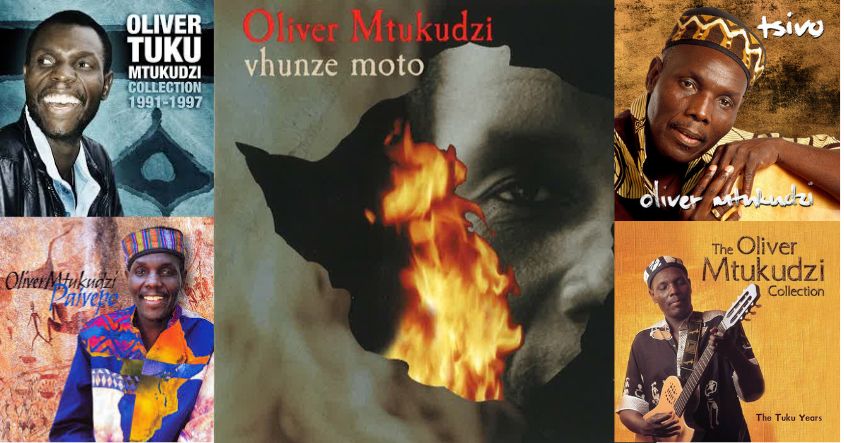
Throughout the 1980s and 1990s, Mtukudzi built a steadily growing audience. His 1993 album Neria became one of his most iconic works.
The album served as the soundtrack to the Zimbabwean film Neria, in which Mtukudzi also starred.
The story of Neria addressed issues surrounding inheritance rights and the treatment of widows, themes that resonated strongly with audiences across Southern Africa.
The success of Neria significantly expanded Mtukudzi’s international profile. Other important albums that defined different phases of his career include:
Tuku Music
Shoko
Svovi Yangu
Tsimba Itsoka
Sarawoga
Over time, his discography grew to exceed 60 albums, making him one of Africa’s most prolific recording artists.
International Recognition and Global Tours
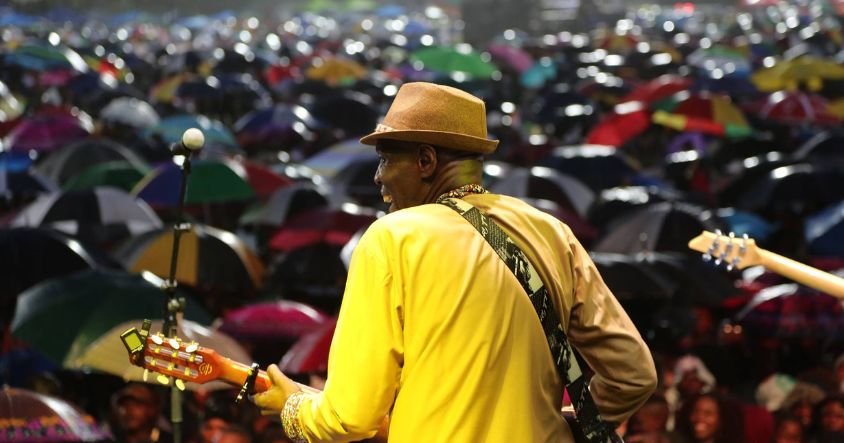
By the late 1990s and early 2000s, Oliver Mtukudzi had become a major presence on the global world music circuit.
He toured extensively across Africa, Europe, North America, Australia, and Asia. His performances at major international festivals helped position Zimbabwean music within the broader global music conversation.
Mtukudzi collaborated with various African and international artists and was signed to international record labels that distributed his music globally. His global touring schedule made him one of Zimbabwe’s most visible cultural ambassadors.
His concerts were known for their energetic yet deeply emotional performances, with audiences often singing along to his Shona lyrics even outside Zimbabwe.
Acting Career and Film Contributions
In addition to music, Mtukudzi pursued acting. His role in Neria solidified his reputation not only as a musician but also as a cultural figure capable of influencing social debates through film. The movie became one of Zimbabwe’s most successful cinematic productions and is often regarded as a landmark in the country’s film history.
His participation in film reinforced the strong narrative and storytelling elements that were already present in his songwriting.
Humanitarian Work and Social Advocacy
Oliver Mtukudzi used his platform to promote social change. His music frequently included messages encouraging responsible behaviour, unity, and moral reflection.
He was appointed a UNICEF Goodwill Ambassador for Southern Africa in recognition of his advocacy work, particularly in raising awareness about HIV/AIDS.
Beyond advocacy through music, Mtukudzi founded the Pakare Paye Arts Centre in Norton, Zimbabwe.
The centre became an important institution for nurturing young artists, providing rehearsal spaces, and promoting Zimbabwe’s creative industries.
Through mentorship and investment in local talent, he contributed directly to the sustainability of Zimbabwe’s arts sector.
Awards and Honours
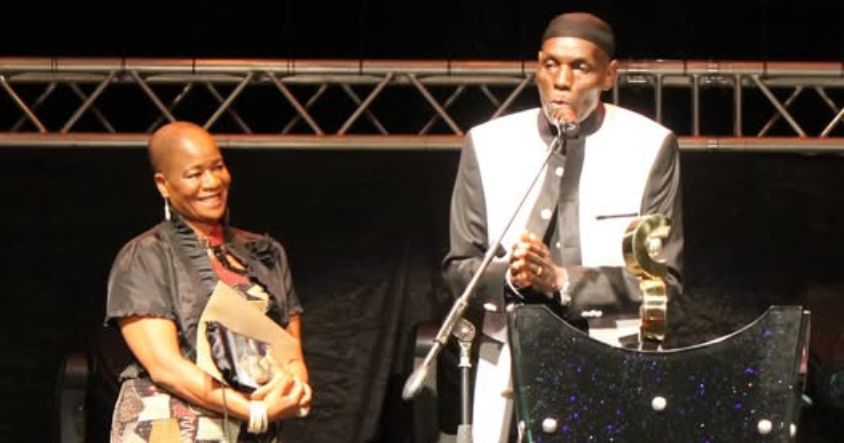
Throughout his career, Mtukudzi received numerous national and international awards. He was honoured for his contributions to music, cultural preservation, and social development.
His influence extended beyond entertainment into education, public health, and national identity.
He was frequently celebrated as a national hero in Zimbabwe and widely respected across the African continent.
Personal Life
Oliver Mtukudzi was married and had children, some of whom pursued careers in music and the arts. Despite his international fame, he remained closely connected to Zimbabwe and continued residing and working in the country throughout most of his life.
He was known for his humility, professionalism, and commitment to mentoring younger musicians.
Death and National Mourning
Oliver Mtukudzi passed away on 23 January 2019 in Harare at the age of 66 after battling illness.
His death prompted widespread mourning in Zimbabwe and across Africa. Political leaders, musicians, and fans paid tribute to a man widely regarded as one of Africa’s greatest musicians.
Memorial services and tributes highlighted not only his musical achievements but also his role as a moral voice and cultural ambassador.
Legacy
Oliver Mtukudzi’s legacy is vast and multifaceted. Musically, he created a recognisable and enduring sound that continues to influence Zimbabwean and African artists.
Socially, he used his platform to address pressing societal issues with dignity and insight. Institutionally, through the Pakare Paye Arts Centre, he invested in the next generation of creatives.
Today, Tuku Music remains a defining element of Zimbabwe’s cultural identity. His recordings continue to be played across radio stations, at cultural events, and on international stages. More than just a musician, Oliver Mtukudzi was a storyteller, mentor, advocate, and national treasure whose impact transcended generations.
Oliver Mtukudzi’s Discography
Mukombe Wemvura (1979)
Chokwadi Chichabuda (1980)
Maungira (1982)
Zimbabwe Africa (1983)
Mabasa (1984)
Gore Rino (1985)
Wawona (1986)
Nyanga Nyanga (1987)
Shoko (1988)
Zhaivha (1989)
Neria (1991)
Svovi Yangu (1992)
Wasakara (1993)
Ziwere MuKobenhavn (1993)
Chikonzero (1994)
Svovi Yangu Vol. 2 (1995)
Shanda (1996)
Tuku Music (1999)
Paivepo (2000)
Bvuma (Tolerance) (2000)
Vhunze Moto (2001)
Shanda Remix (2001)
Tsivo (2003)
Nhava (2005)
Tsimba Itsoka (2007)
Dai Hupenyu Hwaitengwa (2008)
Rudaviro (2010)
Sarawoga (2013)
Mukombe Wemvura (Legacy Edition) (2014)
God Bless You: The Gospel Collection (2014)
Tsoka Dzerwendo (2018)
Compilation Albums & Special Releases
The Best of Oliver Mtukudzi
Tuku Years
Man in the Mirror