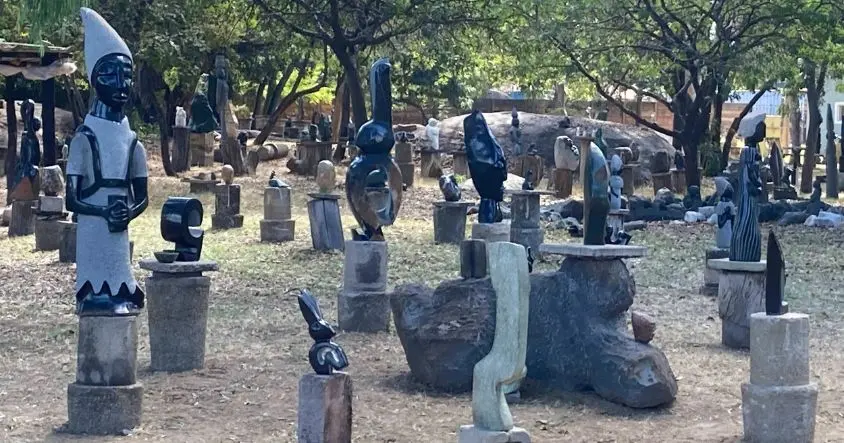
There is a moment that art historians return to often when discussing the emergence of Shona sculpture.
It was 1987, and Newsweek Magazine, reviewing a growing body of work coming out of Zimbabwe, declared it “the most important new art form to emerge from Africa this century.”
The declaration was not hyperbole. In the space of roughly three decades, a group of artists working largely in obscurity in southern Africa had produced a sculptural movement that had exhibited at the Museum of Modern Art in New York, the Rodin Museum in Paris, and the Barbican Centre in London. Prince Charles had opened one of its major exhibitions. Collectors across Europe, North America, and beyond had begun acquiring the work seriously.
What made this all the more remarkable was where it came from, and how quickly it grew. The modern Shona sculpture movement, as we understand it today, emerged in the late 1950s.
By the 1970s, it was internationally celebrated. By the 1980s, it was firmly part of the global art canon. Understanding how that happened requires going back much further than 1957.
The Stone Foundation: Great Zimbabwe and Pre-Colonial Roots
The name Zimbabwe itself carries the answer to a question about the country’s relationship with stone.
Derived from the Shona phrase dzimbadzamabwe, it translates roughly as “house of stone,” and the name is earned.
Between the 11th and 15th centuries, the Shona people built the great stone city from which the country takes its name, a sprawling complex of granite towers, enclosures, and passages constructed without mortar, using hand-hewn blocks fitted with extraordinary precision.
At the time, much of Europe was still emerging from the early medieval period. Great Zimbabwe was, by any measure, an architectural and engineering achievement of the first order.
Archaeologists working at the site have found evidence of an empire deeply engaged in international trade: Chinese porcelain, Persian glassware, and Arab coins among the artefacts recovered from its stone chambers. It was a civilisation connected to the wider world, one that used stone not merely for shelter but as a language of power, identity, and permanence.
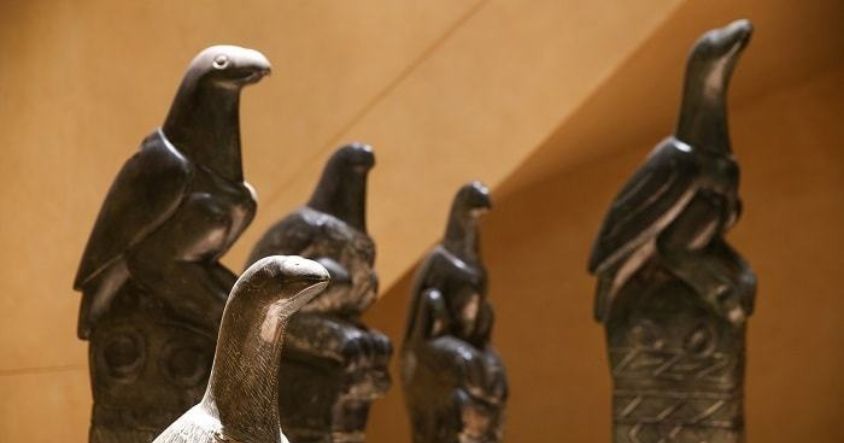
The most celebrated object recovered from Great Zimbabwe is the Zimbabwe Bird, a carved soapstone figure depicting what is believed to be the fish eagle or bateleur eagle.
Eight such birds were found at the site, and one of them now appears on Zimbabwe’s national flag.
These carvings, created between the 14th and 15th centuries, are among the earliest known examples of figurative stone sculpture in the region, and they establish, beyond doubt, that the Shona tradition of working stone for expressive and symbolic purposes predates the modern movement by centuries.
This deep historical relationship between the Shona people and stone, the understanding that the material carries spiritual weight and cultural memory, is not incidental to the story of the modern sculpture movement. It is foundational to it.
The Colonial Precursors: Cyrene and Serima Missions
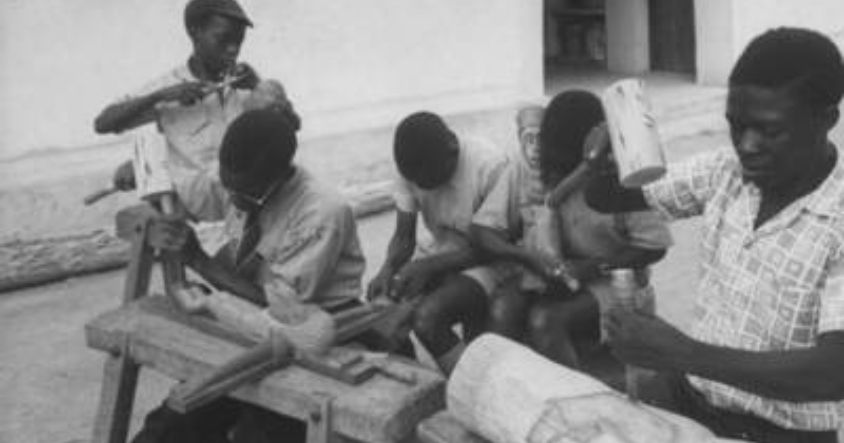
Before the movement that the world came to know as Shona sculpture took shape, two mission schools in Southern Rhodesia were quietly laying educational groundwork that would matter later.
Cyrene Mission, established near Bulawayo in 1939 by Canon Edward Paterson, taught pupils wood carving and stone carving alongside their formal education, and produced a generation of artists with basic technical grounding in working with materials.
Serima Mission, near Masvingo, ran a similar programme. Neither mission produced the movement, but both demonstrated that Zimbabwean artists could work with stone and wood to compelling effect, and both provided a foundation of craft knowledge that incoming artists and curators would build on.
The Catalyst: Frank McEwen and the National Gallery Workshop
In 1957, Frank McEwen arrived in Salisbury, the colonial capital of Southern Rhodesia, to take up his appointment as the founding curator of the new National Gallery.
McEwen was not an ordinary arts administrator. His previous post had been as curator at the Musée Rodin in Paris. He moved in the highest circles of the mid-century European art world, counting Pablo Picasso and Henri Matisse among his acquaintances.
Picasso, famously, had himself drawn deeply from African art in developing his own cubist vocabulary, and McEwen arrived in Rhodesia primed to believe that African artists, given the right conditions, could produce work of world significance.
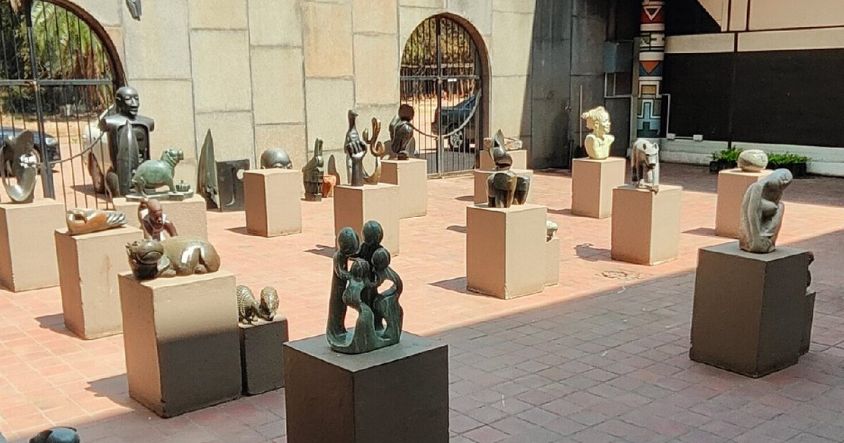
What McEwen did next was, in retrospect, an act of radical trust. He established a sculpture workshop at the National Gallery, provided aspiring artists with tools and stone, and stepped back.
There was no formal instruction, no attempt to impose technique or style. As McEwen himself later described it, the work revealed “the images they bore in their souls.” The sculptors learned from one another, watched one another work, and found their own relationship with the stone.
The results were immediate and astonishing.
The Founders: The First Generation of Shona Sculptors
The artists who came to McEwen’s workshop in the late 1950s and early 1960s were working largely without precedent.
There was no established tradition of figurative stone sculpture in Zimbabwe for them to follow, no school or academy to attend, no canon to refer to. What they had was an intimate knowledge of Shona spiritual life, mythology, and the natural world, and a material, stone, that their ancestors had worked for centuries in different forms.
Joram Mariga is generally regarded as the father of the modern Shona sculpture movement. Working in the Nyanga area of the eastern highlands, Mariga was among the first to translate Shona spiritual imagery into freestanding figurative stone sculpture, carving expressive, often elongated human and spiritual forms from serpentine and other local stones. His influence on subsequent artists was enormous.
Henry Munyaradzi became, over time, the most widely collected and sought-after artist the movement produced. His sculptures, often described as deceptively simple, strip away surface complexity to arrive at a kind of essential form that has proved to have universal appeal. A Munyaradzi piece can be read and felt by a viewer who knows nothing about Shona culture, which is part of what made his work so successful internationally.
Nicholas Mukomberanwa, Bernard Matemera, and John Takawira each developed their own unmistakable visual language. Mukomberanwa worked with black springstone to produce pieces of dense, concentrated spiritual power. Matemera’s work was larger in form and mythological in character, drawing on the spirit world of Shona belief. Takawira brought a lyrical quality to the human figure, his sculptures often appearing to be in the act of movement or transformation.
What united all of them was an approach to stone that understood the material as a partner rather than a medium. As Matemera described it: “The stone speaks to me and tells me what it wants to be.”
Tengenenge: The Sculpture Community That Changed Everything
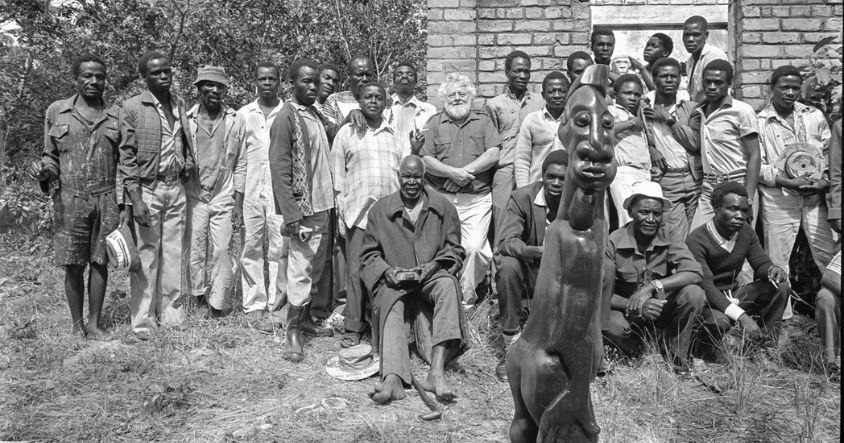
While McEwen’s workshop at the National Gallery was the movement’s original hub, another centre of equal importance emerged in the 1960s through an unlikely figure.
Tom Blomefield was a white tobacco farmer in Tengenenge, in northern Zimbabwe near the Great Dyke, a geological formation that is one of the richest natural sources of high-quality serpentine stone in the world.
When sanctions against Rhodesia made tobacco farming economically unviable, Blomefield looked for an alternative use for his land. He established a sculpture community, invited artists to live and work there, and provided access to the stone that lay beneath his fields.
Tengenenge became one of the most productive artistic communities in the history of African art. Sculptors from across Zimbabwe and beyond gathered there, worked alongside one another, developed their craft, and produced work that was later exhibited around the world.
The community still exists today, and remains one of the most significant sculpture centres on the continent.
A parallel development of importance was the emergence of Chapungu, a sculpture gallery and park established in the eastern suburbs of Harare.
Under Roy Guthrie, Chapungu became a major organiser of international exhibitions and a crucial commercial and promotional engine for artists including Munyaradzi and Mukomberanwa, bringing their work to galleries and collectors in Europe and North America.
Going Global: International Recognition in the 1960s and 70s
By the late 1960s, despite fifteen years of international sanctions against Rhodesia that severely limited its global reach, Shona sculpture had begun to make its mark on the world’s major art institutions. McEwen’s contacts in the European art world, built over decades, proved decisive.
In 1969, Zimbabwean stone sculpture was exhibited at the Museum of Modern Art in New York. In 1971, it appeared at the Museum of Modern Art in Paris. In 1972, it was shown at the Rodin Museum, the institution where McEwen had trained, in Paris. The Institute of Contemporary Arts in London hosted a major exhibition during the same period.
The critical response was bewildered admiration. Reviewers struggled to account for how an art form of such originality, sophistication, and expressive power had emerged from a country with no established sculptural tradition, in the space of less than two decades.
The Sunday Telegraph in London described it as “deeply human, spirited in every sense and superbly skilled.”
The 1969 MoMA exhibition in particular introduced the work to an American collector base that would remain among its most consistent international markets for decades.
Independence and Expansion: 1980 to the Present
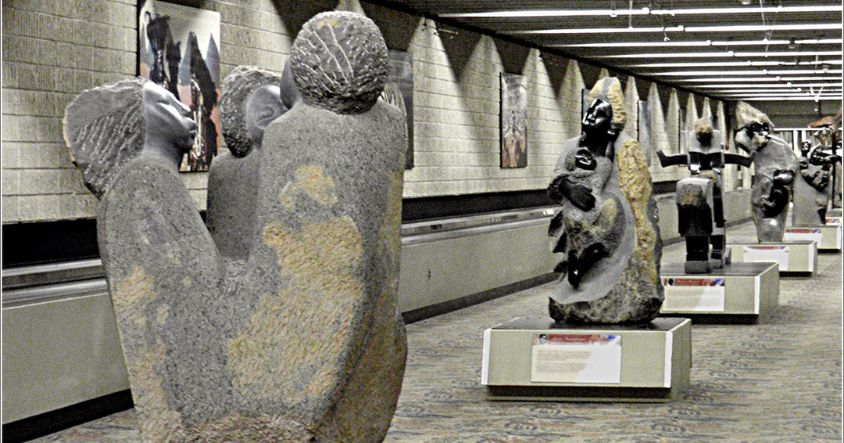
Zimbabwe’s independence in 1980 opened the door to a new era of international engagement.
Prince Charles opened a major exhibition at the Barbican Centre in London that year, a moment of significant cultural visibility at the outset of the new nation’s life.
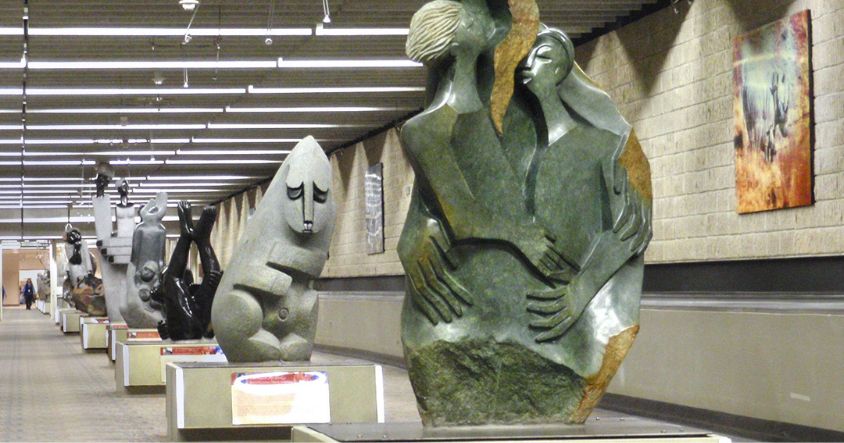
The 1980s saw works placed on permanent display at Atlanta International Airport, and in 1991, a major exhibition toured the Cleveland Museum of Natural History in Ohio.
The post-independence generation of sculptors built on the foundations laid by Mariga, Munyaradzi, Mukomberanwa and their peers, while finding their own directions.
Dominic Benhura emerged as one of the most celebrated contemporary voices in the movement, his work characterised by dynamic, expressive figures that blend technical mastery with emotional directness.
Tapfuma Gutsa pushed at the boundaries of what sculpture in the Shona tradition could do, incorporating installation elements and engaging with global contemporary art conversations.
Joe Mutasa’s graceful, proudly featured figures became among the most recognisable and sought-after works of the second generation.
Today, the movement is genuinely global in its reach. ZimSculpt, a world-touring exhibition that has been on the road since 2000, describes itself as holding the largest collection of Shona sculptures in the world, and has appeared at venues across the United States, Europe, and beyond.
Galleries in Scottsdale, New York, London, and Sydney hold and sell work by Zimbabwean sculptors.
The Shona Sculpture Gallery in Harare, open daily to visitors near the airport, offers one of the finest introductions to the movement’s breadth and depth available anywhere in the world.
The Materials: Stone as Language
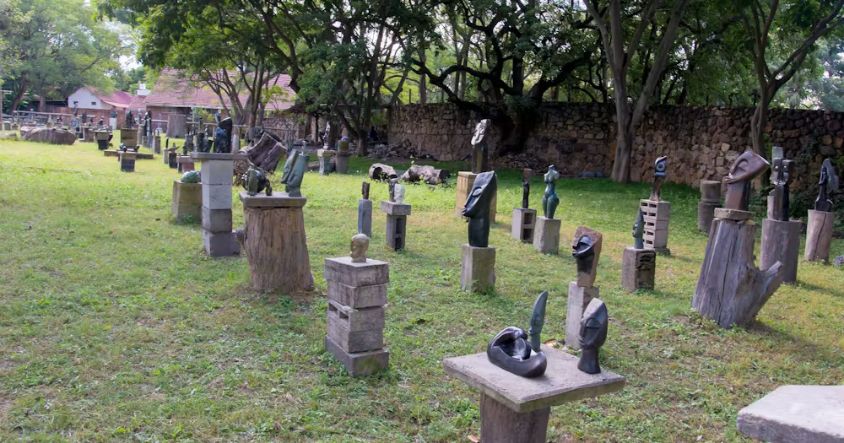
Shona sculpture is inseparable from the stones it is made from, and Zimbabwe’s geology is part of why the movement emerged here and nowhere else.
The country sits on some of the most varied and abundant deposits of carvable stone on the African continent.
Serpentine, in its many varieties, is the most commonly used material. It ranges in colour from pale green to deep black, and its relative softness makes it accessible to carvers working with hand tools, while its hardness is sufficient to produce works of durability and permanence.
Spring stone, a harder and denser material with a rich dark colour, is prized for its ability to hold fine detail.
Verdite, dolomite, and cobalt stone each bring their own visual character to the work.
The choice of stone is never merely practical. Sculptors speak of the stone as having its own personality, its own intention, its own forms waiting inside it.
The carver’s job is not to impose an image on the material but to find the form the stone already holds. This philosophy, which echoes aspects of Shona spiritual belief about the presence of spirits in natural objects, gives the work its characteristic quality of appearing to emerge from within rather than being imposed from without.
Spirituality: The Soul of the Work
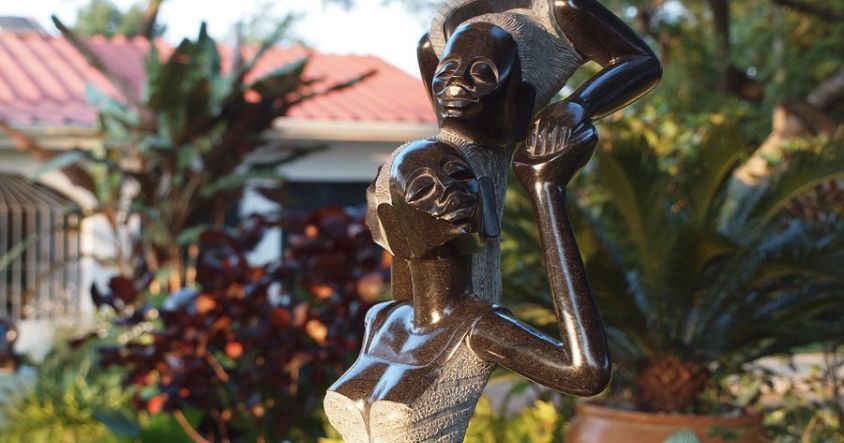
To understand Shona sculpture fully, one must understand something of the spiritual world from which it draws.
Shona religious belief centres on the relationship between the living and the ancestral spirits, known as vadzimu, who continue to influence the lives of their descendants.
The spirit mediums, or svikiro, serve as conduits between the living and the dead, and the imagery of spiritual possession, of beings in transition between states, of the boundary between the human and the non-human, runs through the sculpture consistently.
Many of the most celebrated works depict figures that appear to be neither fully human nor fully spirit, caught in a moment of transformation or communion.
Faces emerge from within abstracted forms. Figures merge with animals. Hands reach upward in gestures that suggest prayer, supplication, or an act of receiving something from a higher plane.
The spiritual content of the work is not decorative. For the artists of the founding generation in particular, the process of carving was itself a form of spiritual practice, a way of listening to the stone and to the ancestor spirits that were believed to guide the hand.
Why It Matters: A Living Tradition
The history of Shona sculpture is not a history of something finished. The movement is alive, producing new artists, finding new audiences, and evolving in response to the contemporary world.
Young Zimbabwean sculptors today engage with themes of diaspora, urbanisation, climate, and identity alongside the spiritual and mythological concerns of their predecessors.
The mentoring tradition that McEwen observed in the founding generation, where younger artists learn by watching the masters, continues at Tengenenge and across the country’s sculpture communities.
What makes the story remarkable is not just the quality of the work, although the quality is extraordinary. It is the speed and conditions of the emergence. A movement that began with a single curator and a set of tools in 1957, in a country under colonial rule and international sanctions, managed to place its work in the world’s greatest museums within a single generation. It did so not by imitating European styles, but by going deeper into its own cultural inheritance.
That, perhaps, is the most important lesson the history of Shona sculpture offers: that the most universal art is the most particular, and that the deepest cultural roots produce the highest reach.
Where to See and Buy Shona Sculpture
For visitors to Zimbabwe, the primary destinations are the National Gallery of Zimbabwe in Harare, Chapungu Sculpture Park in the eastern suburbs, the Shona Sculpture Gallery near Harare airport, and the Tengenenge Art Community in Mashonaland Central, where sculptors still live and work on the original farm established by Tom Blomefield.
Each offers a different window into the movement, from its historical foundations to its contemporary directions.
For those abroad, ZimSculpt’s touring exhibition is the most accessible way to see a large collection in person, and a growing number of international galleries now carry Zimbabwean sculpture as a permanent part of their offering.