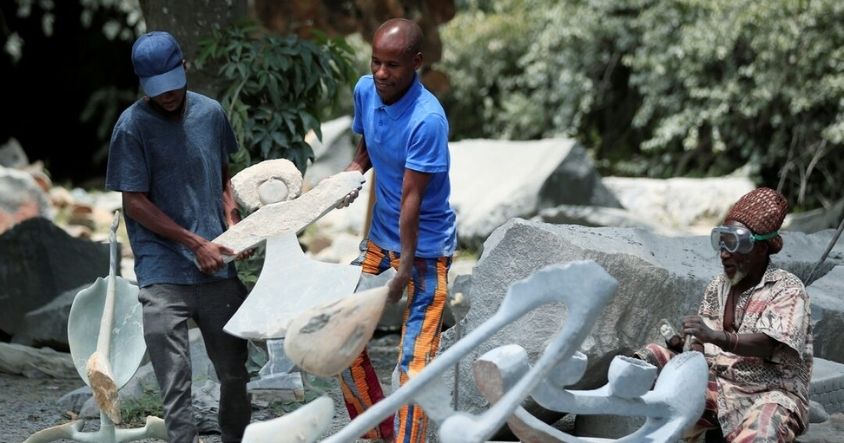
Nearly five decades after first carving stone in Harare, Dominic Benhura is charting a new chapter in an already storied career — this time with a strategic focus on Asia, and China in particular.
The internationally acclaimed Zimbabwean sculptor, whose works have long been exhibited and auctioned across Europe and the United States, is gaining renewed attention after it emerged that Chinese President Xi Jinping owns two of his sculptures.
The pieces, presented as diplomatic gifts, have helped cement Benhura’s reputation in one of the world’s most influential and competitive art markets.
For Zimbabwe’s creative sector, the endorsement carries significance beyond individual success.
It comes at a time when many traditional stone sculptors are struggling, squeezed by declining tourism and changing economic realities.
Some have abandoned sculpture altogether, turning to practical stonework such as tombstones or kitchen fittings.
Benhura’s expanding footprint in China offers a contrasting narrative, one of reinvention, resilience and global relevance.
A calculated shift east as Dominic Benhura sets sights on China
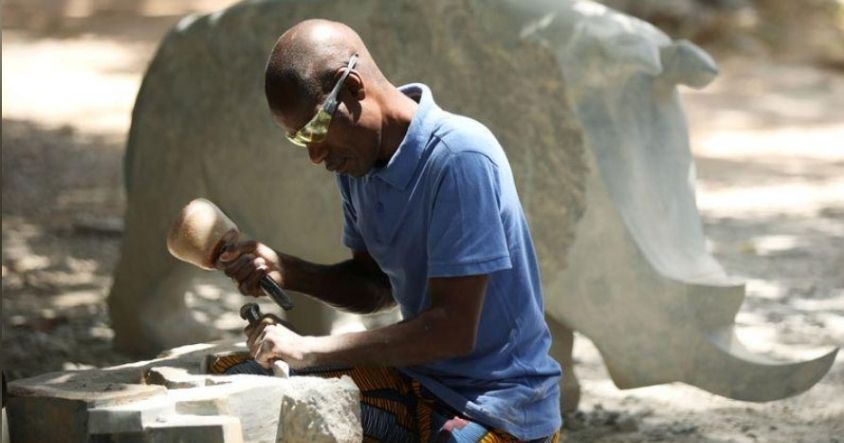
Benhura recently featured in the documentary Zimbabwe–China Relations @45, released by a local think tank, where he reflected on how his work has found resonance in China, a country of more than 1.4 billion people.
“As you know, the President of China, His Excellency Xi Jinping, has two of my pieces,” Benhura said in the film. “After those gifts, I created additional works that were presented to various Chinese officials.”
The impact, he explained, was immediate. Chinese journalists based across Africa travelled to his studio for interviews and features, generating widespread coverage on multiple platforms.
The exposure translated into new collectors, friendships and commissions, opening doors that had previously been difficult for African sculptors to access.
Benhura has since exhibited in China, including at the 9th Beijing International Arts Biennale in 2022, a major global event that brings together more than 5,000 artists from over 100 countries, promoting harmony through contemporary art.
Reviving confidence in Shona sculpture
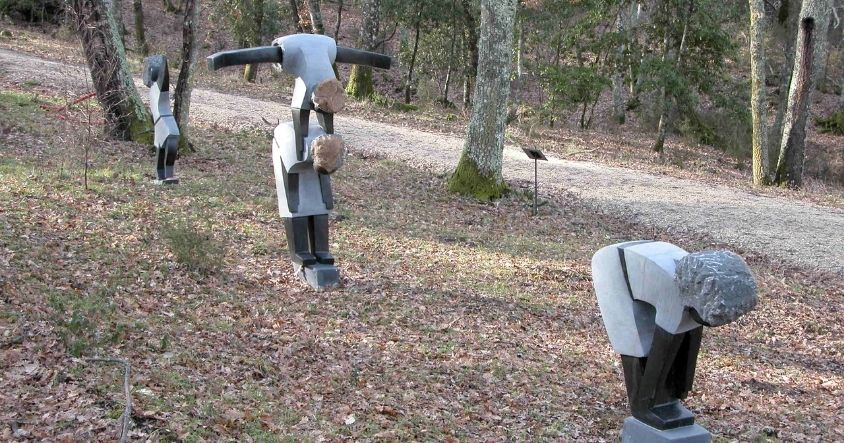
A multiple award winner and a leading advocate of Shona sculpture, Benhura is often described as a game-changer within the movement.
His success contrasts sharply with the fortunes of many peers who once relied heavily on tourist markets that have yet to fully recover.
Alongside fellow sculptor David Ngwerume, Benhura has continued to build international networks through collaboration and cultural exchange.
For younger artists, his trajectory serves as proof that traditional Zimbabwean art forms can still compete and thrive on the global stage when paired with strategic market engagement.
Cultural diplomacy and exchange
Zimbabwean arts authorities say Benhura’s breakthrough in China reflects deeper cultural cooperation between the two countries.
Napoleon Nyanhi, chief executive of the National Arts Council of Zimbabwe (NACZ), said arts and cultural exchange programmes with China have created tangible opportunities for local creatives.
“The National Arts Council of Zimbabwe has been at the forefront of facilitating exchange programmes for young people, artists and practitioners with their Chinese counterparts,” he said. “These initiatives have significantly benefited our artists.”
China has also supported creative development through programmes such as DreamStar, a nationwide talent search that nurtures young Zimbabwean performers in music, dance and beat-boxing.
Winners receive prizes, recording contracts and opportunities to tour and showcase in China.
The project has helped launch acts such as the award-winning Afro-contemporary group Fusion 5 Mangwiro.
Tichaona Zindoga, producer of Zimbabwe–China Relations @45 and team leader at Ruzivo Media & Resource Centre, said such initiatives highlight the often-overlooked cultural dimension of bilateral relations.
“Art and music are universal languages,” he said. “They have the power to unite people and deepen friendships, especially among the younger generation. Investing in this space strengthens people-to-people ties between Zimbabwe and China.”
From Murewa to the world
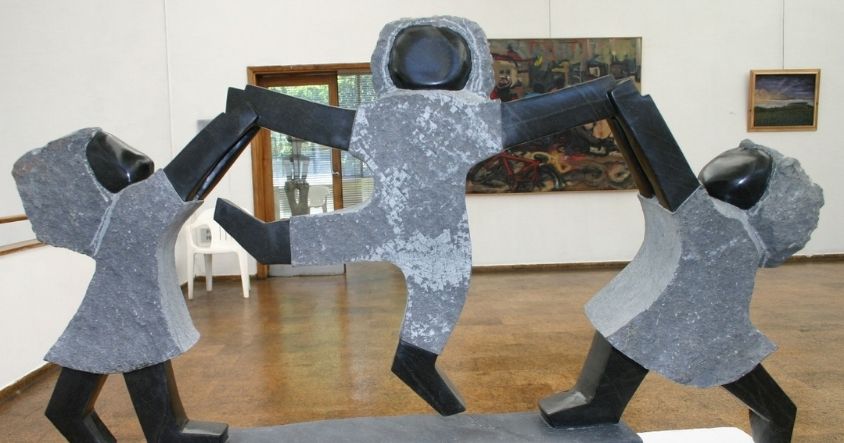
Born in Murewa, Mashonaland East, in 1968, Benhura moved to Harare in 1980 to attend secondary school. He lived with his uncle, Sekuru Gutsa, and his cousin Tapfuma Gutsa, then already an emerging sculptor.
It was under their guidance that Benhura was introduced to stone sculpture, a turning point that would shape his life’s work.
His style, often characterised by fluid forms, movement and emotional intimacy, has become instantly recognisable.
Over the years, his sculptures have been collected by galleries, institutions and private buyers across continents.
In 2003, his standing as a cultural figure was underscored when he met Nelson Mandela after one of his works, Swing Me, Mama, was installed in Johannesburg as part of a display honouring the former South African president.
Looking ahead
Now approaching 50 years since his emergence onto the art scene, Benhura shows little sign of slowing down.
His growing presence in China signals not just personal success, but a broader opportunity for Zimbabwean art to reassert itself globally through new markets and cultural diplomacy.
At a time when many sculptors are questioning the future of their craft, Dominic Benhura’s journey east suggests that Zimbabwean stone — when paired with vision and persistence — can still speak powerfully to the world.
Based on an article written by Trust Khosa in the Herald