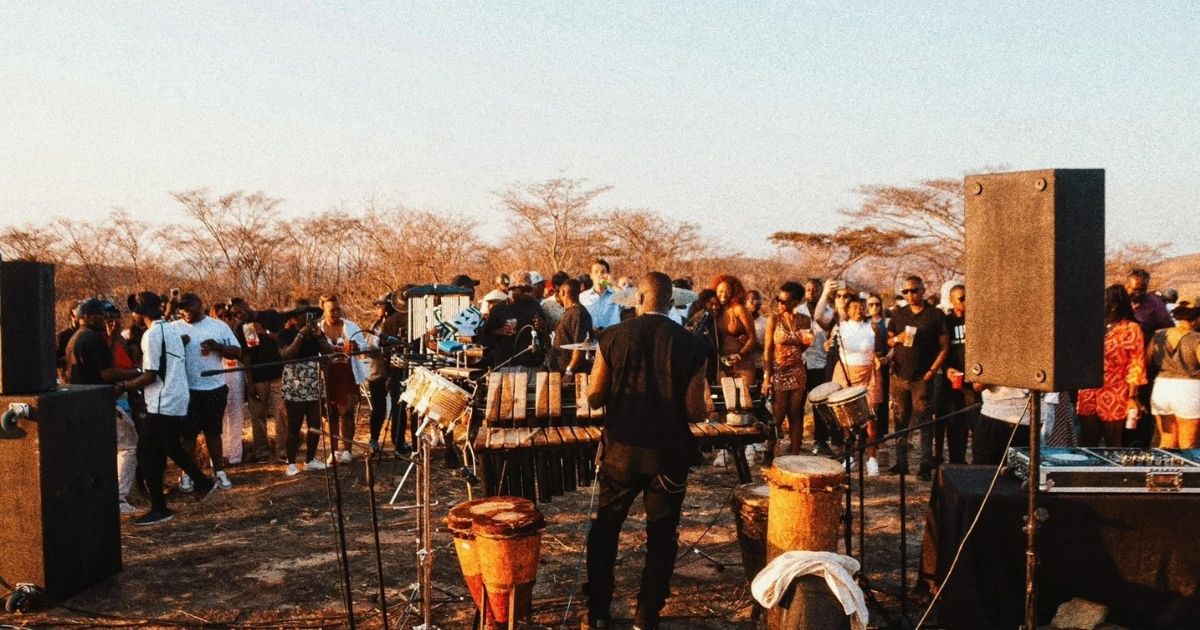
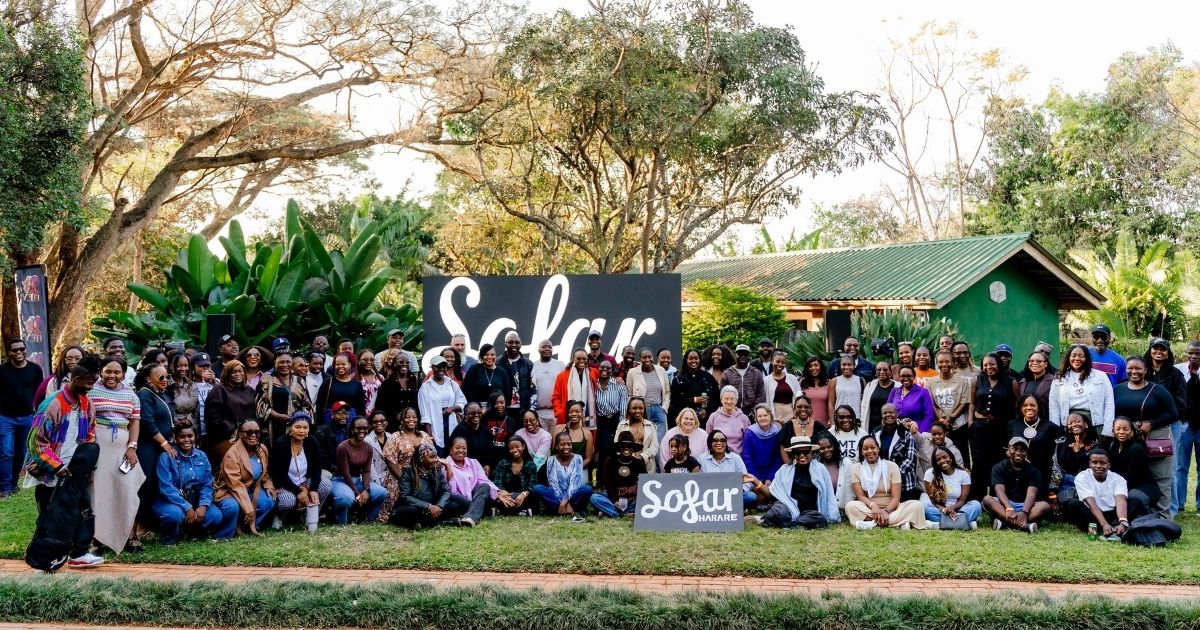
On Saturday afternoon, a few hundred people will make their way to a private residence in Borrowdale for a concert whose location most of them will have known for little more than 36 hours.
They will arrive at a sloping garden punctuated by monumental stone sculptures by Zimbabwean artist Dominic Benhura, one of those secluded Harare spaces that can feel almost invisible until somebody tells you where to find it.
There will be no support acts, no printed running order and no conventional festival-style timetable. Normally, the artists performing would have remained largely unknown until they walk on stage.
This is Sofar Sounds Harare‘s second natural hair edition, a concert built around Afros, locs, coils and, in the words of its host, “shiny bald heads”.
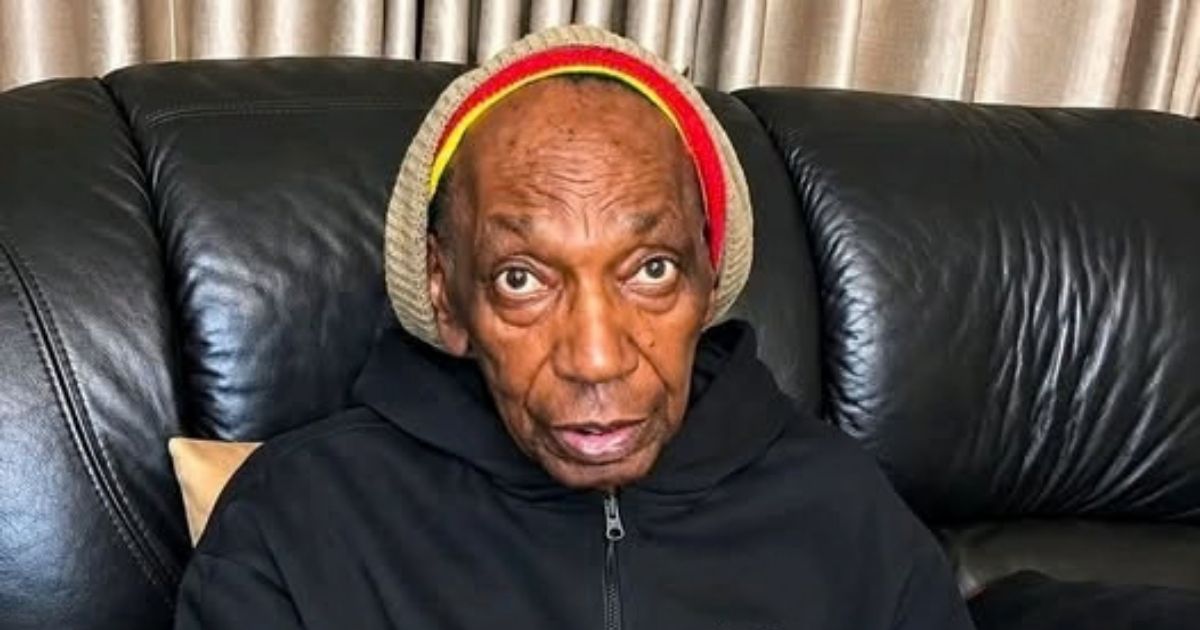
It is being held at the home of ophthalmologist Dr Solomon Guramatunhu, a prominent advocate for natural hair who has spent years encouraging Zimbabweans, particularly women, to reconsider the widespread use of chemical relaxers and extensions in favour of their natural hair.
For Sofar Harare, the choice of venue is unusual. The platform has made a point of moving its concerts around the city rather than returning to the same location.
But the response to last year’s natural hair edition was strong enough to justify breaking that rule.
And so, for one afternoon, the Sofar audience will return to the same Borrowdale garden.
What is Sofar Sounds?

Sofar Sounds began in London in 2009 after three friends became frustrated by a familiar problem: they had gone to see live music but could barely hear the performers above the noise of the crowd.
One of them subsequently invited a small group of people into his north London flat for an intimate performance.
What began as a gathering of about eight people evolved into a distinctive live music format.
The idea was simple but unusual. Put musicians in unexpected spaces, keep the line-up secret and create an environment in which audiences actually listen.
Almost two decades later, Sofar Sounds has developed into an international live music network operating in hundreds of cities around the world.
Its alumni include artists such as Ed Sheeran, Leon Bridges and Billie Eilish, musicians who appeared on the circuit before becoming internationally recognised names.
The platform says its performers have collectively received 129 Grammy nominations and 21 wins, as well as 53 Brit Award nominations and 35 wins.
For artists, particularly those working outside the traditional global music centres, that history has become part of Sofar’s appeal.
The promise is not necessarily instant fame. It is the possibility of being heard by a new audience.
Sofar Sounds Harare
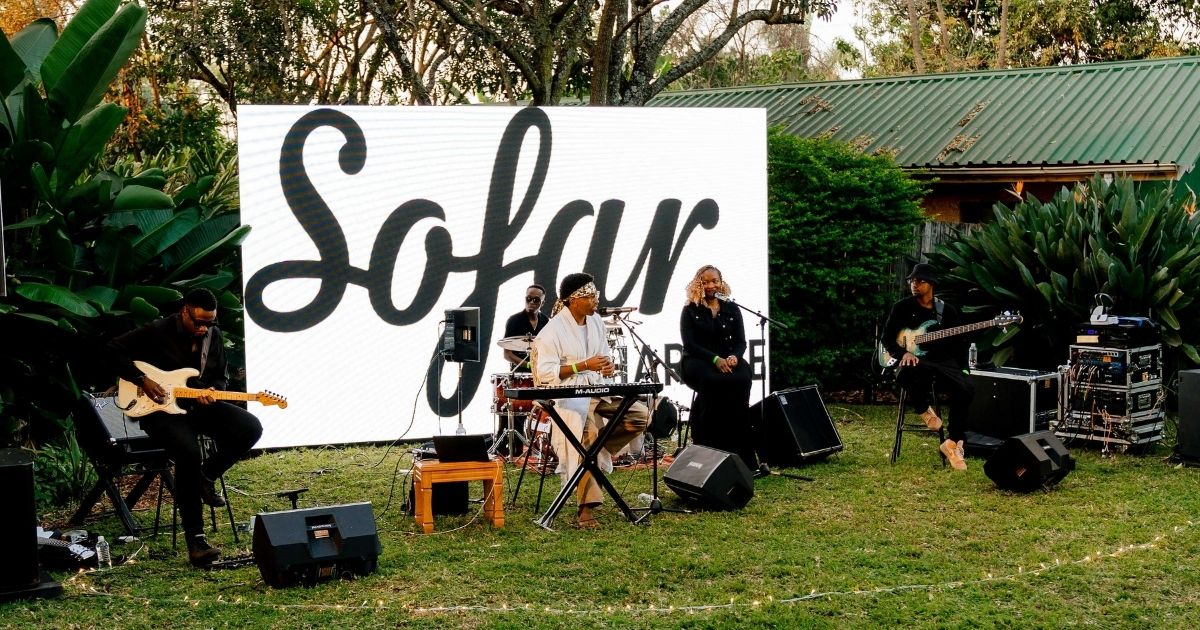
Zimbabwe’s Sofar story began in December 2022 at Vanilla Moon, a restaurant in Mount Pleasant, Harare.
The first concert was curated by journalist and broadcaster Khumbulani Muleya, who has since become Sofar Harare’s principal curator and city lead.
Afro-acoustic group Gwevedzi performed at that inaugural show and were subsequently shortlisted for a Sofar residency in London.
It was an early indication of what makes the platform particularly interesting in Zimbabwe.
Artists do not necessarily have to spend years establishing themselves within Harare’s conventional live music circuit before gaining exposure to an international audience.
Sofar provides another route.
Since that first concert, the Harare chapter has staged 37 editions, according to Muleya, taking its audiences to some of the city’s most recognisable cultural institutions and unexpected private spaces.
The National Gallery of Zimbabwe, Chapungu Sculpture Park, First Floor Gallery, the Hyatt Regency Harare and the British Council have all hosted Sofar performances.
So have private homes.
More than 150 Zimbabwean artists have passed through the platform, alongside musicians from countries including South Africa, Botswana, Kenya, the Democratic Republic of the Congo, Lesotho and Spain.
That geographic mix has given Sofar Harare a role that extends beyond simply organising concerts.
It has become a meeting point for musicians, cultural organisations and audiences from Zimbabwe and elsewhere.
Why Sofar Harare keeps changing venues
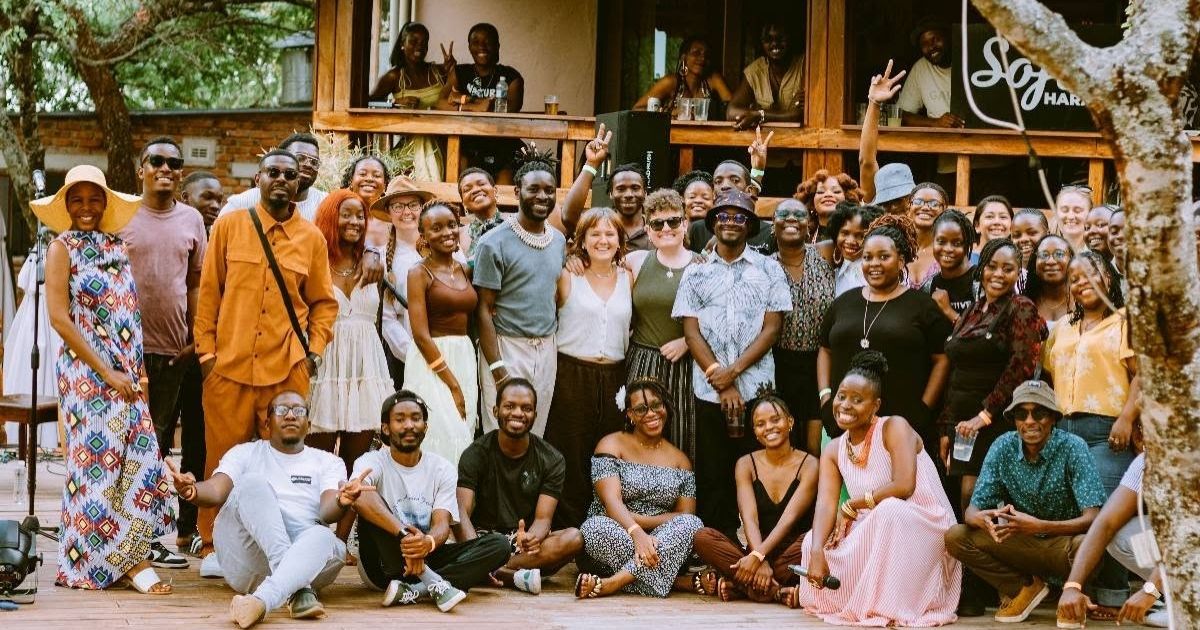
There is a deliberate logic behind the secrecy and constant movement.
Muleya describes Sofar as being closer to a listening session than a conventional party. Audiences are invited to pay attention to the performers rather than spend the evening talking over them.
“A Sofar show is not like a party. It’s more like a listening session,” said Muleya in an interview with 263Culture.
“The idea is to create a personal space where the artist and audience become one.”
The address is normally disclosed only after attendance has been confirmed, while the performers remain a mystery until the concert begins.
“We also don’t announce the artist who will be performing, and for some of our shows we never reveal the address until 36 hours before the show. This builds that element of surprise.”
The policy of changing venues has another consequence in Harare: it encourages people to experience parts of their own city they might otherwise never visit.
A concert might take place at an established cultural institution one month and in a private garden the next.
A previous edition transformed the upper deck of the Hyatt Regency’s swimming pool area into a 1970s-inspired music and fashion experience.
Another was held at the British Council in Belgravia, while a hillside guesthouse in Glen Lorne provided a natural amphitheatre overlooking the valley.
In this sense, Sofar’s model has become a modest form of domestic tourism.
The audience is not simply being taken to a concert. It is being taken somewhere.
Natural hair becomes part of the experience
The natural hair theme gives the upcoming edition an identity beyond the music.
Zimbabwe’s relationship with natural hair has long been complicated by questions of beauty, professional appearance, fashion and cultural identity.
For decades, chemically straightened hair, wigs, weaves and extensions have been prominent in the country’s beauty industry.
At the same time, a growing natural hair movement has encouraged women and men to embrace Afros, locs, coils and other natural styles.
Guramatunhu has been an outspoken participant in that conversation.
His advocacy has sometimes provoked criticism, particularly around his views on women’s hair. But the Sofar event offers a less confrontational setting in which the natural hair message becomes part of a wider celebration of Zimbabwean identity and creativity.
Guests are encouraged to arrive wearing their natural hair.
There is no requirement to conform to a particular style.
The invitation is simply to show up as you are.
From Harare living rooms to international cultural exchanges
Sofar Harare’s growth has also attracted the attention of diplomatic missions and international cultural organisations.
The European Union recently worked with Sofar Sounds Harare as part of Europe Month, bringing Spanish flamenco guitarist Juan Cruz Palacios to Zimbabwe.
Palacios spent time collaborating with Zimbabwean guitarist Trust Samende and mbira player Jacob Mafuleni before the musicians performed together at the residence of the EU ambassador.
The collaboration placed Zimbabwean musicians and an international artist in the same creative space, rather than treating cultural exchange as a one-way presentation.
The United States embassy has also worked with Sofar Harare and spoken-word platform Word Kalcha on cultural programming, including a Black History Month event held at the Friendship Bench Hub.
The programme brought together spoken word, hip-hop and mbira as part of the wider Freedom 250 celebrations marking the 250th anniversary of the United States.
Sofar Harare has also developed relationships with other diplomatic missions, including the Dutch, Swiss and Serbian embassies, while an artist exchange programme with the United States has been developed through Sofar’s New York chapter.
For Muleya, these relationships form part of a larger ambition for Zimbabwean musicians.
The objective is not simply to give artists another local gig.
It is to help them develop audiences, production standards and professional networks that could eventually allow them to compete in international markets.
“We want to help our local artists to tap into a global audience without necessarily having to be famous in Zimbabwe by taking advantage of Sofar’s international positioning.”
That is an ambitious proposition for a concert series built around secret addresses and intimate performances.
But the platform’s growth suggests that the model has found an audience.
A different route into Zimbabwe’s music industry
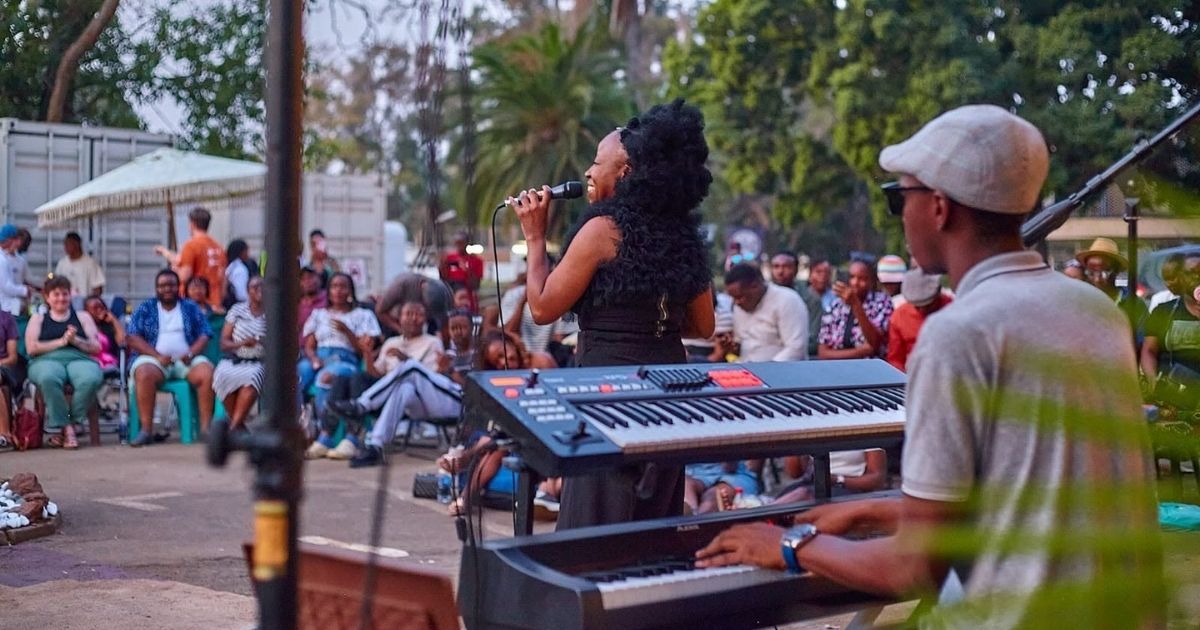
Zimbabwe has no shortage of talented musicians.
The more difficult question is often how those musicians move beyond the limitations of the local live circuit.
For emerging artists, exposure can be dependent on radio play, established promoters, social media reach or connections within the entertainment industry.
Sofar offers another route.
Its intimate format removes some of the hierarchy of a conventional concert. There is no headline act towering over a list of support performers. Instead, artists share the same basic premise: a room, an audience and a few songs.
That can be particularly valuable for musicians whose work does not fit neatly into mainstream commercial categories.
It also allows audiences to encounter artists without the expectations attached to a familiar name.
The result is a curious reversal of the traditional concert experience.
Instead of deciding which artist to see and then buying a ticket, the audience buys into an experience first and discovers the artist afterwards.
Who is performing at this weekend’s Sofar Harare concert?
The secrecy surrounding Sofar concerts means that the full line-up is not traditionally publicised beforehand.
For this weekend’s natural hair edition, however, confirmed performers include Fusion 5 Mangwiro, an award-winning Afro-contemporary group known for its close three-part harmonies, djembe and acoustic guitar arrangements.
Jazz and mbira-folk singer-songwriter Raven Duchess, a regular on the Sofar Harare circuit, is also set to perform.
Their presence reflects the musical breadth that has become characteristic of Sofar Harare, where contemporary Zimbabwean sounds can sit alongside folk, jazz, acoustic music, spoken word and international influences.
The rest of the day’s surprises will be revealed in the way Sofar prefers: one performer at a time.
For the audience, that is part of the bargain.
Come for the music.
Come for the natural hair.
Come for the unusual venue.
But, above all, come without expecting to know exactly what will happen.
That uncertainty is the point.

Andrew Moyo is a veteran entertainment journalist with over a decade of experience. He has worked for some of the biggest publications in Zimbabwe including The Sunday Mail.