

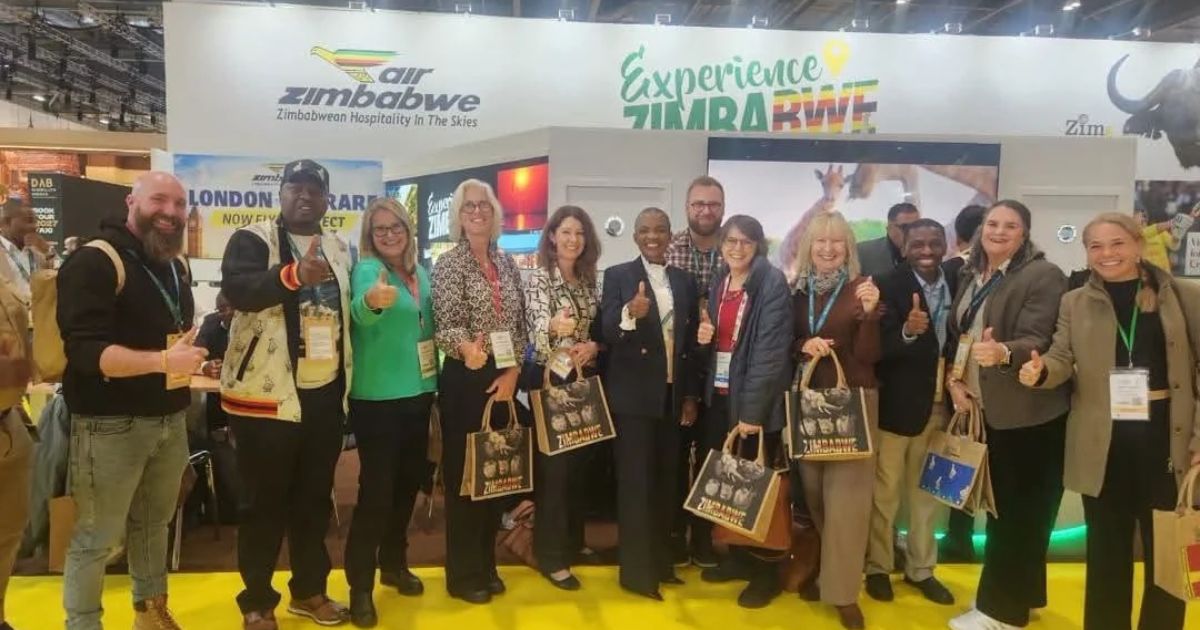
Zimbabwe used the World Travel Market (WTM) London 2026 to promote its tourism attractions, pursue investment opportunities and strengthen business relationships with international travel operators, as the country sought to expand its presence in the European market.
A delegation led by Tourism and Hospitality Industry Minister Barbara Rwodzi represented Zimbabwe at the three-day exhibition, which ran from 3 to 5 November at ExCeL London. The delegation included the Zimbabwe Tourism Authority (ZTA), tourism operators and other industry stakeholders.
The country’s showcase featured its wildlife, natural attractions, cultural heritage, adventure experiences and investment opportunities, with the Zimbabwean stand attracting what the ZTA described as encouraging interest on the opening day.
The authority said the delegation held business engagements with international tour operators, travel trade partners, prospective investors and international media, seeking to turn interest in Destination Zimbabwe into commercial partnerships.
Rwodzi also toured the Zimbabwe stand alongside the country’s Ambassador to the United Kingdom, Colonel Christian Katsande, and ZTA chief executive officer Dr George Manyaya.
The participation formed part of Zimbabwe’s broader efforts to strengthen its international tourism links, expand access to overseas markets and attract investment into the sector.
Rwodzi put community benefits at the centre of tourism strategy

Beyond promoting the country’s attractions, Rwodzi used the WTM Ministers’ Summit to make the case for a tourism industry whose success was measured by its economic and social impact on local communities.
The summit, organised in partnership with UN Tourism and the World Travel & Tourism Council (WTTC), was held under the theme Strengthening Tourism for a Resilient and Regenerative Future.
Addressing international tourism leaders, the minister argued that tourist arrival figures alone did not provide a complete measure of the sector’s success.
She said greater attention needed to be paid to tourism’s contribution to gross domestic product (GDP) and, more importantly, how the industry’s value chain improved the livelihoods of people living in and around tourism destinations.
Communities, she emphasised, were not merely beneficiaries of tourism but custodians of the cultural heritage and natural resources that Zimbabwe presented to international visitors.
Her remarks highlighted the importance of ensuring that ordinary and marginalised Zimbabweans involved in tourism-related activities benefited meaningfully from the industry’s growth.
She linked this approach to the country’s ambition of attaining upper-middle-income status by 2030, arguing that tourism needed to contribute more directly to improving household incomes and supporting local economic development.
The minister put tourism’s contribution at approximately 10% of national GDP.
She also pointed to the sector’s resilience during 2024, when global mineral price pressures and climate-related difficulties in agriculture affected other parts of the economy.
The argument placed the focus on the wider economic value of tourism, extending beyond hotels, airlines and established attractions to include farmers, transport operators, food suppliers, artisans and other small businesses connected to the industry.
Climate change and the future of Zimbabwe’s wildlife
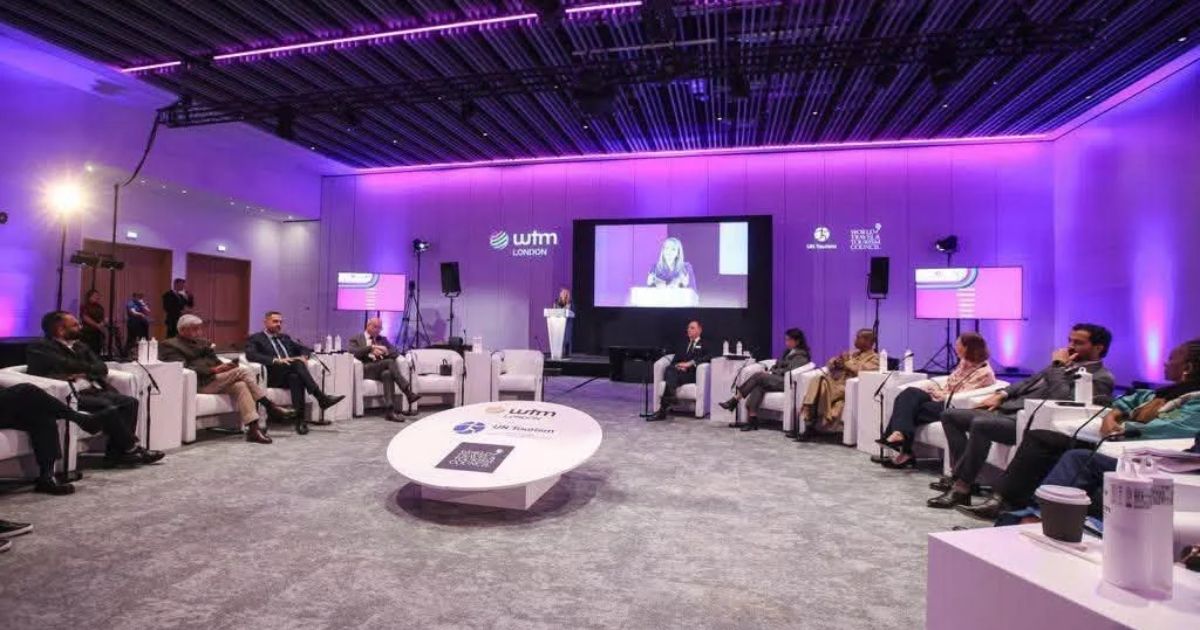
The effects of climate change on tourism also featured prominently in Rwodzi’s contribution.
Zimbabwe’s tourism industry depends heavily on its natural environment, from the wildlife-rich landscapes of Hwange National Park and Mana Pools to the Zambezi River and Victoria Falls.
However, droughts and changing climatic conditions have placed pressure on water resources, wildlife, biodiversity and tourism infrastructure.
The minister called for collective international action and sustainable water solutions to help protect tourism destinations against these challenges.
She also acknowledged the Government’s dam construction programme as an important part of efforts to improve water security for communities, wildlife and conservancies.
Her contribution reaffirmed Zimbabwe’s commitment to climate-resilient tourism and highlighted the importance of international cooperation, peace and stability in supporting the development of the sector.
She reiterated the country’s foreign policy principle of being “a friend to all and an enemy to none”, linking international relations to the need for cooperation in tourism development.
The discussion also connected with the United Nations’ designation of 2027 as the International Year of Sustainable and Resilient Tourism.
Traditional cuisine added to Zimbabwe’s tourism pitch
Gastronomy tourism was another area highlighted during the minister’s engagements.
Rwodzi recognised Tourism Patron First Lady Dr Auxillia Mnangagwa for her efforts to promote Zimbabwean traditional cuisine, which helped raise the country’s profile in international gastronomy tourism.
Zimbabwe’s selection to host the inaugural UN Tourism continental gastronomy conference provided further recognition of the country’s efforts to position food heritage as part of its tourism offering.
Traditional dishes, local ingredients and culinary experiences have increasingly formed part of destination marketing, creating opportunities for farmers, food producers, hospitality businesses and local communities.
The minister also highlighted Air Zimbabwe‘s restored direct Harare-London service as an important development for tourism connectivity.
The airline resumed flights between Harare and London Gatwick on 22 July 2026, after a 14-year interruption. The three-times-weekly service restored a direct connection between Zimbabwe and the United Kingdom, providing another route for visitors and business travellers.
Turning international exposure into tourism growth
Zimbabwe’s participation at WTM comes at a time when the country is seeking to translate international destination marketing into increased visitor arrivals, investment and stronger commercial links.
For local tourism operators, the exhibition provided an opportunity to engage directly with overseas buyers and present products to an international audience.
The conclusion of WTM London 2026 marked the end of another international marketing opportunity for Zimbabwe. The longer-term measure of its participation will be whether the business connections and visibility generated at the exhibition translate into stronger investment, more visitors and improved livelihoods for communities across the country.